Health sector — Rawalpindi Division
Four districts — Rawalpindi, Attock, Chakwal, and Jhelum — facility overview, teaching/DHQ hospitals, and Punjab health budget context.
Facilities (division total)
Total384Rawalpindi Division has a total of 384 state-run hospitals and health facilities documented across its 4 districts.
Listed categories sum to 386 due to dual-categorized structures inside the Rawalpindi urban core profiles. Data compiled from individual district administrative registries.
This data is for the entire Rawalpindi Division (4 districts).
Facility breakdown by type and district
| Facility type | Division total | Rawalpindi | Attock | Chakwal | Jhelum |
|---|---|---|---|---|---|
| Teaching / Allied Hospitals | 5 | 5 | 0 | 0 | 0 |
| DHQ Hospitals | 5 | 2 | 1 | 1 | 1 |
| THQ Hospitals | 16 | 6 | 5 | 3 | 2 |
| RHCs (Rural Health Centers) | 27 | 6 | 5 | 10 | 6 |
| BHUs (Basic Health Units) | 274 | 98 | 63 | 64 | 49 |
| Govt. Rural Dispensaries | 35 | 6 | 23 | 0 | 6 |
| MCH Centres (Mother & Child Health) | 24 | 6 | 9 | 9 | 0 |
Other tertiary elements (e.g., Rawalpindi Institute of Cardiology, City Hospital Talagang, TB Hospital Jhelum) are integrated under major district hubs.
Facility Types — Division Counts
BHUs by District
Rawalpindi and Chakwal show the highest BHU concentrations in the division.
Beds per 1,000 People by District
Rawalpindi City operates at 0.72 beds per 1,000 despite carrying a regional catchment of over 15 million people.
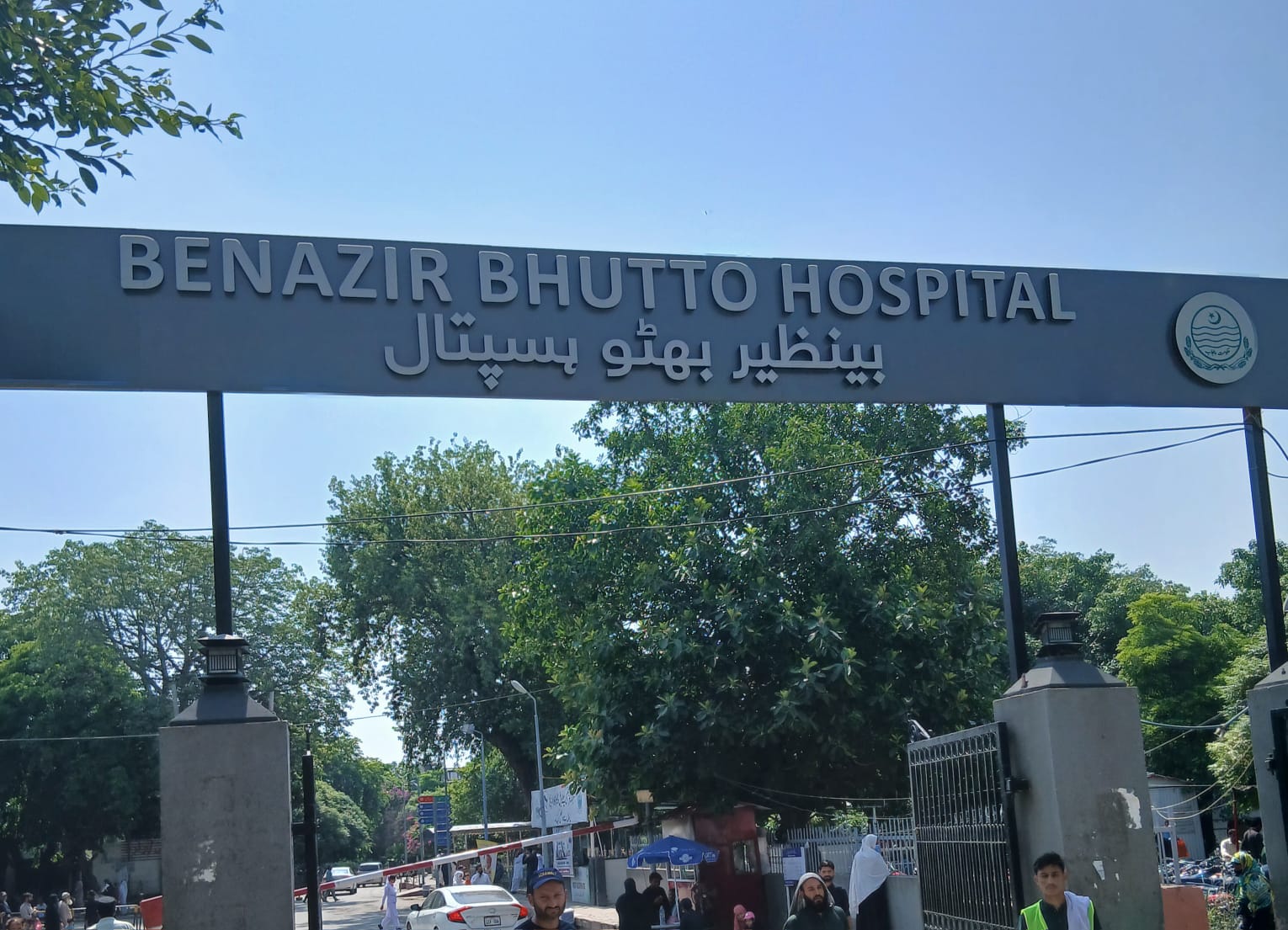
1. Tertiary Medical Core (Rawalpindi City)
Hospitals: 3 primary teaching hubs — Holy Family Hospital, Benazir Bhutto Hospital, and Rawalpindi Institute of Cardiology (RIC).
Capacity & Load: Operates under extreme over-capacity at an overstretched ratio of 0.72 beds per 1,000 citizens. It carries the primary trauma and tertiary referral loads for a massive regional catchment of over 15 million people spanning Northern Punjab, AJK, and parts of KP.
Major Specialized Units: Comprehensive Emergency & Trauma Centers, Advanced Neonatal Intensive Care, specialized Cardiology/Catheterization Labs, Urology, and Oncology.
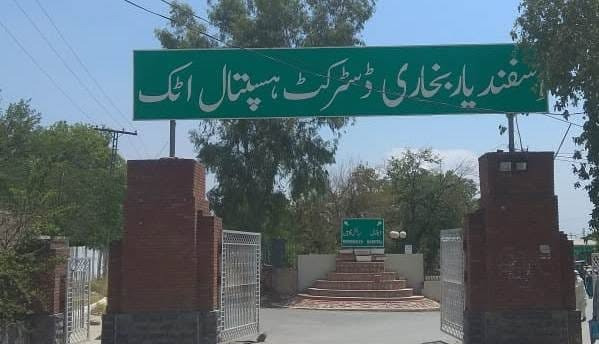
2. DHQ & THQ Network — Attock
Bed Capacity Index: 0.34 beds per 1,000 citizens.
Facilities: 1 DHQ Hospital and 5 THQ Hospitals.
Core Challenge: Severe primary healthcare infrastructure deficit. Lacks localized advanced critical care units, systematically shifting complex trauma cases outward to Rawalpindi's already congested teaching facilities.
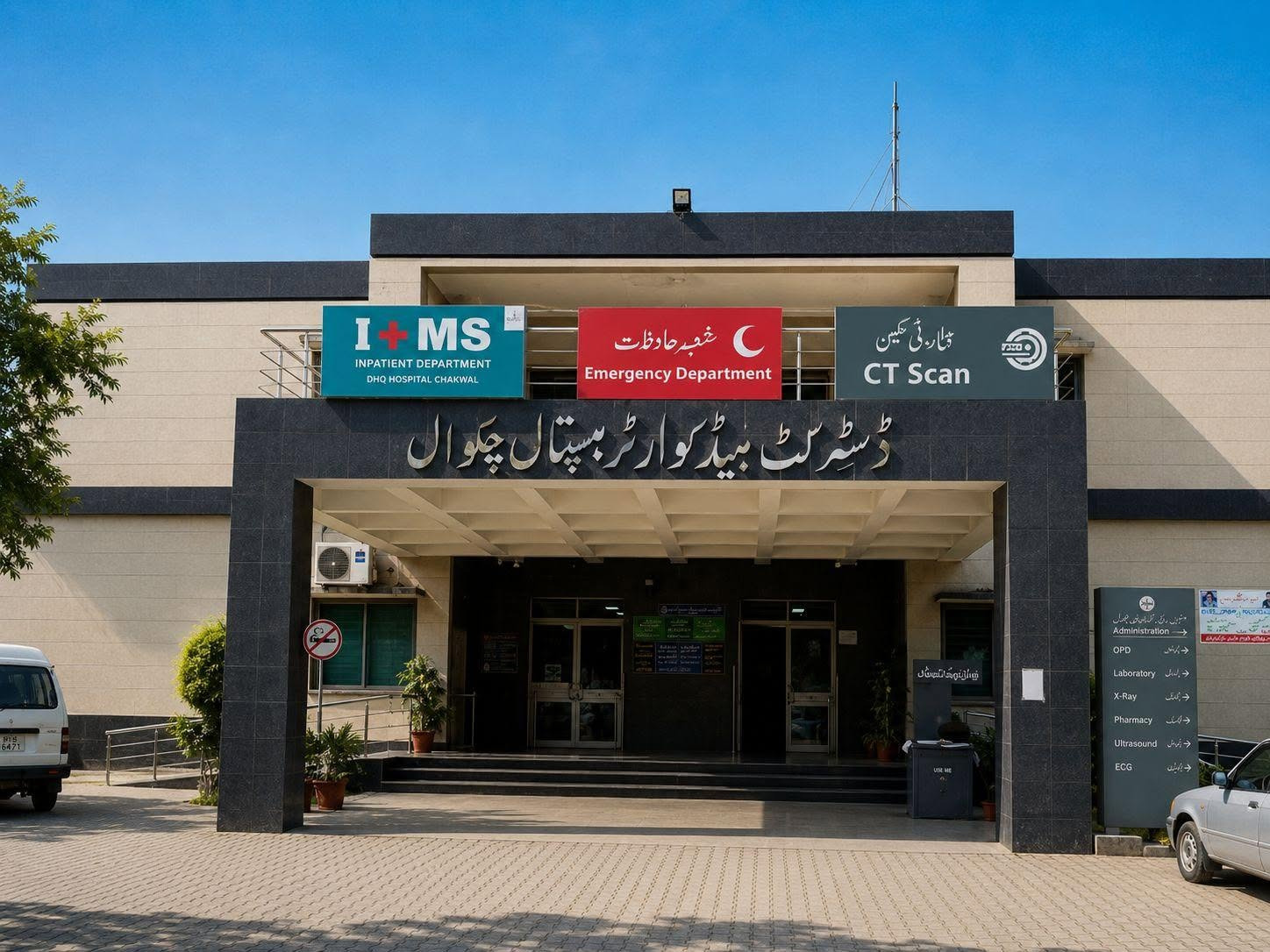
3. DHQ & THQ Network — Chakwal
Bed Capacity Index: 0.38 beds per 1,000 citizens.
Facilities: 1 DHQ Hospital, 3 THQ Hospitals, and 1 City Hospital Talagang.
Core Challenge: Intense primary healthcare strain. The sprawling layout systematically shifts critical cardiac care and severe accidental trauma cases out to distant metropolitan tertiary units.
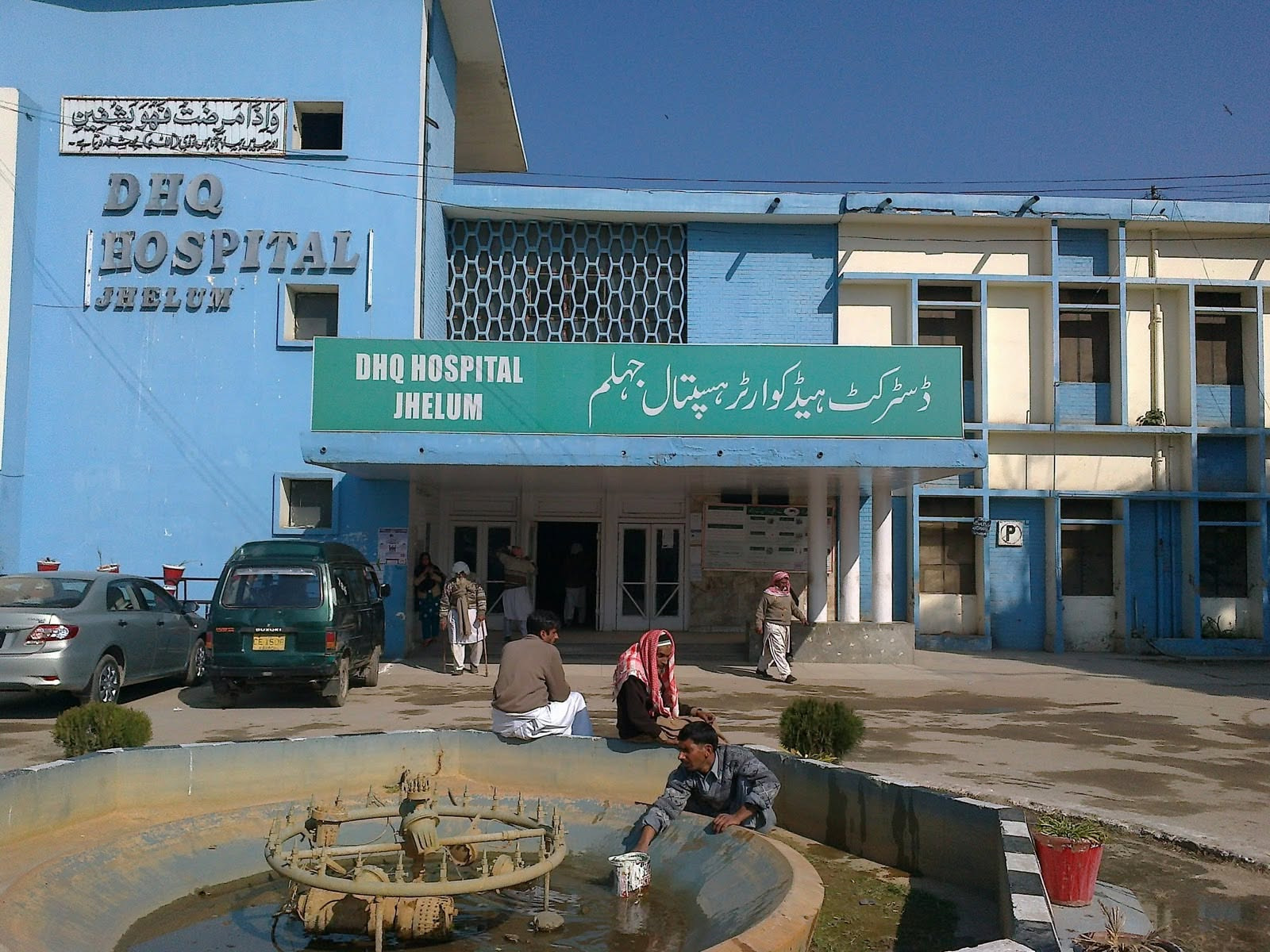
4. DHQ & THQ Network — Jhelum
Bed Capacity Index: 0.42 beds per 1,000 citizens.
Facilities: 1 DHQ Hospital, 2 THQ Hospitals, and 1 dedicated TB Hospital.
Core Challenge: Remote sub-divisions (like Sohawa and Pind Dadan Khan) suffer from long, hazardous transit networks, rendering them entirely dependent on Rawalpindi for complex neonatal and cardiac emergencies.
Punjab health budget (context)
Rawalpindi Division development budget (total modified grant): ~158.9 Billion PKR across all channels. The massive bulk of this budget is controlled via Provincial Account-I (large sector projects), while local District Health Authorities (DHA Account-VI) receive extremely capped operational slices.
| District Health Authority (Account-VI) | Allocation |
|---|---|
| Rawalpindi DHA | 280.7 Million PKR |
| Chakwal DHA | 71.8 Million PKR |
| Attock DHA | 17.7 Million PKR |
| Jhelum DHA | 3.2 Million PKR |
This financial structure leaves peripheral rural populations (over 28% of the division) entirely unserved by localized, modern basic healthcare assets.